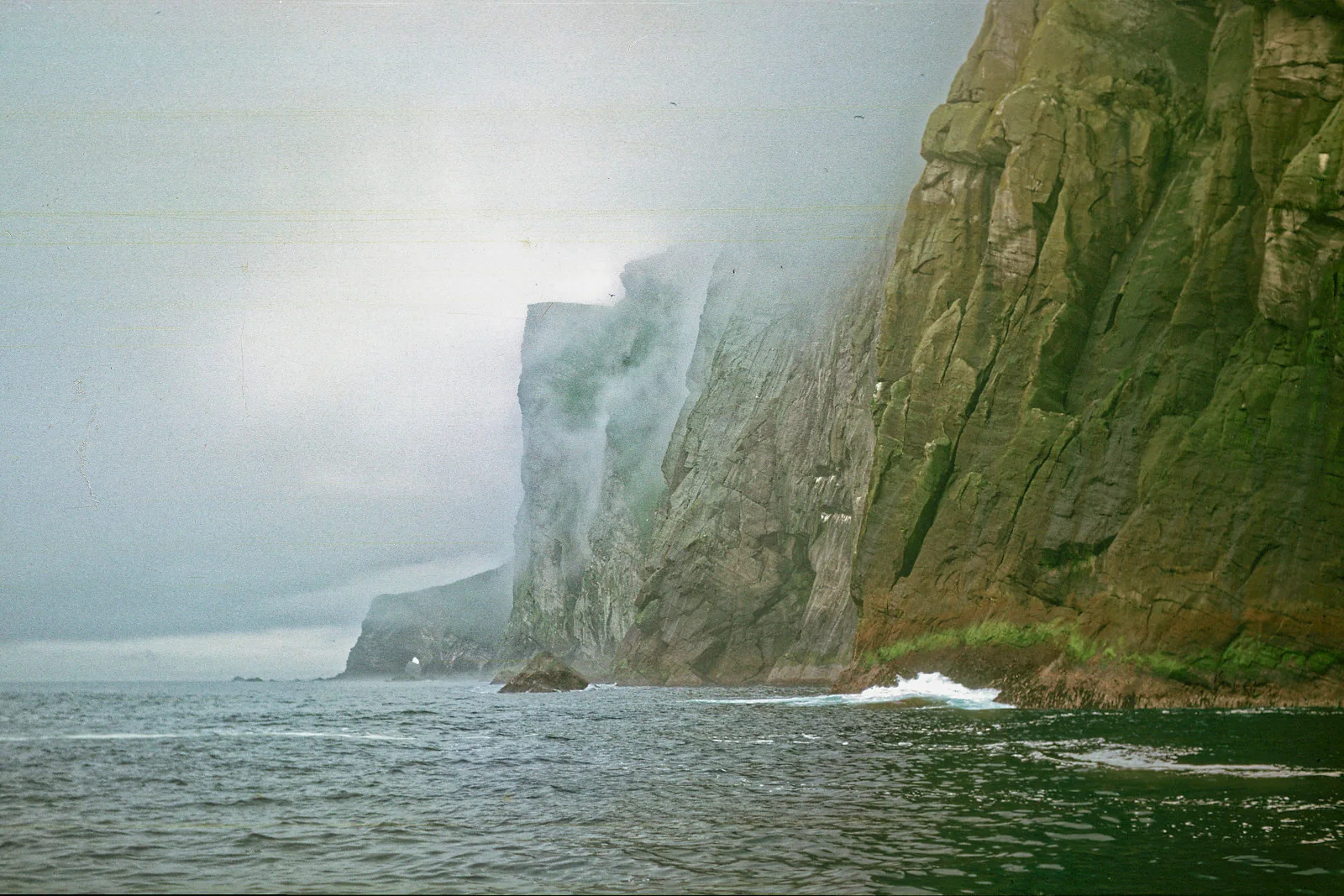
Stand beside a puffin colony above the Firth of Forth
The island allows close observation without a long expedition, while strict paths protect burrows and nesting cliffs.
Plan the least frequent boat or flight first, then use the remaining time for the signature route rather than trying to collect every viewpoint.
Look a little closer
Worth discovering
The details that make Isle of May different.
Photo journal
01
Puffin burrows
Large seasonal colonies occupy grassy slopes.
Destination view
02
Stevenson lighthouse
Maritime history is visible in several generations of lights.
Destination view
03
Pilgrim and monastery remains
Ruins record a much older island use.
Photo journal
A closer look at Isle of May
8 photographs
01Atlantic puffins take off02Isle of May — view 20320250510-DSCF8155042014 - Trip to the Isle of May (14164216824)052014 - Trip to the Isle of May (14184211953)062014 - Trip to the Isle of May (14164216644)072014 - Trip to the Isle of May (14164128185)082014 - Trip to the Isle of May (13977484130)
The full story
Reading the layers of Isle of May
A small Scottish island concentrates seabirds, seals, lighthouses and early Christian history within easy walking distance. Its character becomes clearer when geology, settlement and modern protection are considered together.
4 min readFirth of Forth, United Kingdom
Isle of May is centred on Firth of Forth, where a small Scottish island concentrates seabirds, seals, lighthouses and early Christian history within easy walking distance. The strongest reason to make the journey is to stand beside a puffin colony above the firth of forth.
Visitors often encounter Isle of May through the idea of “Stand beside a puffin colony above the Firth of Forth”, but the destination is more than that single scene. Its landscape carries evidence of work, movement, adaptation and environmental change. The island allows close observation without a long expedition, while strict paths protect burrows and nesting cliffs.
Because land is limited, every ridge, bay and passage acquires practical importance. At Isle of May, “Puffin burrows” is where that compressed geography becomes easiest to read. Large seasonal colonies occupy grassy slopes.
Isle of May is not a uniform area. Changes in elevation, exposure, water and substrate produce distinct environments over short distances, which is why a route through the place often reveals more than a fixed viewpoint.
02
Cultural landscape
Lives shaped by the terrain
The Isle of May occupied an important position for medieval navigation and religion at the mouth of the Firth of Forth. A monastery associated with Saint Adrian developed here, and archaeological work has revealed burials, buildings and long contact between the island and coastal communities.
Scotland's first permanently manned lighthouse was established on the island in the seventeenth century using a coal fire. Robert Stevenson designed the present main lighthouse in the early nineteenth century, while the foghorn, keepers' buildings and later automation record the evolution of maritime safety.
03
Turning point
What altered the old balance
The bird observatory founded in 1934 and national nature reserve status shifted the island from navigation station toward long-term ecological monitoring. Monastic remains, lighthouse engineering and dense seabird colonies occupy the same compact plateau, making the island unusually legible as both cultural and natural history.
04
Field notes
Three details that explain the whole place
At Isle of May, the feature “Puffin burrows” is best understood as part of the surrounding system rather than an isolated stop. Large seasonal colonies occupy grassy slopes. Within Isle of May, it is both an attraction and a record of the processes described above.
Look closely at the feature “Stevenson lighthouse” in Isle of May; it carries information that a panoramic view can miss. Maritime history is visible in several generations of lights. For Isle of May, that relationship is more informative than treating the feature only as a photograph or checklist item.
At Isle of May, the feature “Pilgrim and monastery remains” is one of the most useful pieces of visible evidence. Ruins record a much older island use. For Isle of May, that relationship is more informative than treating the feature only as a photograph or checklist item.
05
Continuity
Season, scale and the present day
At Isle of May, season is part of the landscape history, not merely a planning detail. For Isle of May, the most reliable visiting window is Apr-Aug.
For Isle of May, the stated visiting window is Apr-Aug, but its practical meaning depends on local weather, water and transport rather than the calendar alone.
Placed within its wider geography, Isle of May is not an isolated exception. Beyond the best-known image of Isle of May feature, Isle of May matters because stevenson lighthouse and pilgrim and monastery remains place the destination inside a broader regional story.
Chronology
Key dates
Monastery and pilgrimage
A religious community and burial ground linked the island to settlements around the Forth.
Coal-fired lighthouse
A permanent beacon began warning ships from one of Scotland's most dangerous coastal positions.
Bird Observatory founded
Systematic migration studies added scientific research to the island's long navigation role.
Travel notes
Plan your visit
Time needed
3-5 days
Getting around
Local transport, walking and boat or ferry connections
Effort
Easy to moderate
Plan first
Main flight or ferry, accommodation and weather backup
Time of day
Morning movement; late light for coast
Best window
Apr-Aug
Traveller stories
Stories from people who have been here.
First-hand moments, practical notes and overlooked details from Isle of May.