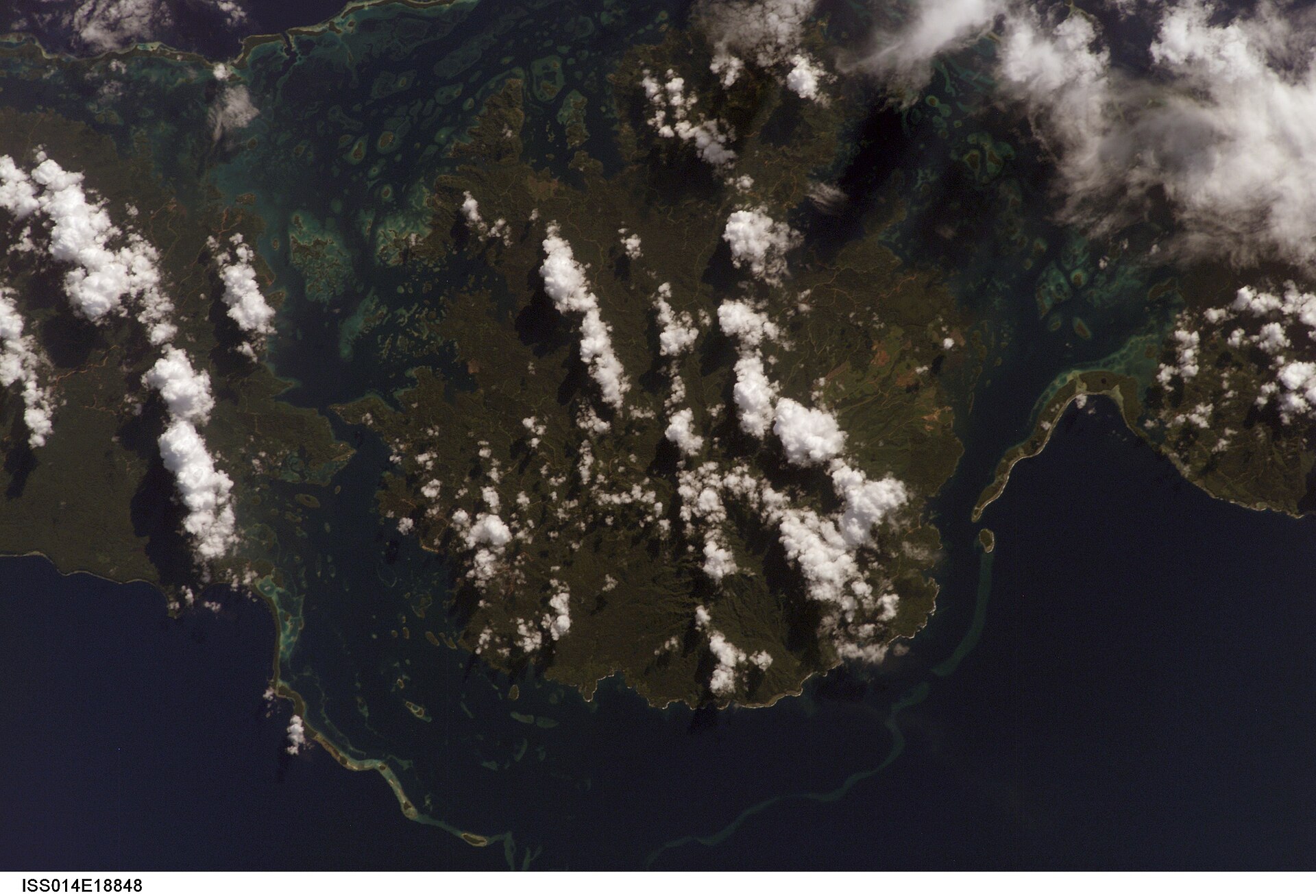
Raivavae offers the visual completeness of mountain, village, reef and motu while retaining the practical intimacy of a small Austral Islands community.
Stay long enough to connect Raivavae's headline landscape with one quieter local route rather than treating it as a single viewpoint.
Look a little closer
Worth discovering
The details that make Raivavae different.
Destination view
01
A surviving stone tiki
Raivavae has important carved stone figures and archaeological remains linked to pre-contact Polynesian society.
Photo journal
02
Austral coolness
Its southern latitude brings cooler seasons and a different agricultural and climatic feel from the Society Islands.
Destination view
03
Lagoon with many motu
Small reef islands form a nearly continuous outer world around the central volcanic island.
Photo journal
A closer look at Raivavae
4 photographs
01Raivavae ISS00602Raivavae ISS006 -103Petroglyph, tuff, Raivavae, Austral Islands in French Polynesia04Raivavae
Deep background
Raivavae: the story behind the landscape
A cool-season Polynesian island of green volcanic peaks, a broad lagoon, sculpted stone heritage and small villages far south of Tahiti. Its character becomes clearer when geology, settlement and modern protection are considered together.
4 min readAustral Islands, French Polynesia, France
Raivavae offers the visual completeness of mountain, village, reef and motu while retaining the practical intimacy of a small Austral Islands community.
The strongest visual shorthand for Raivavae is the experience described as “Quiet South Pacific island”. Behind it lies a more complex relationship between physical processes, settlement and the modern idea of the place as a destination. At Raivavae, allow enough time to connect Raivavae's headline landscape with one quieter local route instead of reducing Raivavae to a single viewpoint.
Understanding Raivavae starts below the visible surface. A deeply eroded volcanic core rises within a wide reef lagoon dotted with motu, beaches and shallow channels.
On an island, coast, altitude and exposure work together. At Raivavae, the feature described as “A surviving stone tiki” shows how a short distance can separate sheltered ground from a very different ocean-facing environment. Raivavae has important carved stone figures and archaeological remains linked to pre-contact Polynesian society.
02
Lives and livelihoods
How people learned to live here
Polynesian settlers created marae, agricultural terraces and stone sculpture across Raivavae, using the sheltered lagoon and fertile valleys within a wider Austral Islands voyaging network. Large tiki figures and ceremonial sites indicate political and religious centres that were already established before sustained European contact.
Missionaries and French colonial authority transformed religion, dress, governance and settlement during the nineteenth century. Churches became village landmarks, while canoe building, taro cultivation and weaving continued through new institutions and a growing connection to Tahiti.
03
Change
A landscape reorganised
Air access and small-scale tourism made Raivavae easier to reach without producing the resort landscape seen elsewhere in French Polynesia. Marae, sculptural remains, churches, gardens and lagoon motu still show a sequence of Polynesian, mission and modern island life.
04
Visible evidence
The evidence still visible on the ground
Look closely at the feature “A surviving stone tiki” in Raivavae; it carries information that a panoramic view can miss. Raivavae has important carved stone figures and archaeological remains linked to pre-contact Polynesian society. Within Raivavae, the feature explains why this destination differs from nearby landscapes.
At Raivavae, the significance of the feature “Austral coolness” goes beyond its visual impact. Its southern latitude brings cooler seasons and a different agricultural and climatic feel from the Society Islands. Within Raivavae, it is both an attraction and a record of the processes described above.
At Raivavae, the significance of the feature “Lagoon with many motu” goes beyond its visual impact. Small reef islands form a nearly continuous outer world around the central volcanic island. For Raivavae, that relationship is more informative than treating the feature only as a photograph or checklist item.
05
Continuity
Season, scale and the present day
A single visit to Raivavae captures only one phase of its annual cycle. The cooler dry season is comfortable but can bring wind and rougher lagoon conditions. The warmer wet season is more humid and cyclone-aware.
For Raivavae, the most useful time of day is: morning lagoon and late mountain light.
For Raivavae, plan this first: flight schedule and guesthouse.
Placed within its wider geography, Raivavae is not an isolated exception. For Raivavae, the wider context shows that, tubuai and Rurutu reveal other Austral Island combinations of raised coral, volcanic land and strong local cultural continuity.
Chronology
Key dates
Polynesian ceremonial landscape
Communities built marae, carved stone figures and organised agriculture around valleys and lagoon resources.
Mission and French influence
Christianity and colonial administration reorganised villages and public authority.
Limited air access and tourism
Improved transport connected Raivavae with Tahiti while keeping visitor numbers relatively low.
In context
Get to know the place
The landscape
A deeply eroded volcanic core rises within a wide reef lagoon dotted with motu, beaches and shallow channels.
People and place
Austral Polynesian language, churches, fishing, farming and craft traditions shape four small villages linked by a coastal road.
Seasonal character
The cooler dry season is comfortable but can bring wind and rougher lagoon conditions. The warmer wet season is more humid and cyclone-aware.
Beyond the main view
Tubuai and Rurutu reveal other Austral Island combinations of raised coral, volcanic land and strong local cultural continuity.